In today’s digital landscape, cyber threats are evolving at an alarming pace. From sophisticated phishing schemes to ransomware attacks and credential stuffing, cybercriminals are continuously exploiting the weakest link in the cybersecurity chain—human error. As businesses and individuals increasingly rely on digital platforms to store, access, and manage sensitive information, a robust security strategy has become essential.
Among the most effective tools in modern cybersecurity is Multi-Factor Authentication (MFA). Once considered optional, MFA is now recognized as a critical security control. No longer a luxury or a recommendation, MFA has become non-negotiable.
In this blog, we’ll explore why MFA is a must-have, how it works, the threats it mitigates, and why eScan strongly advocates for its universal adoption.
What is Multi-Factor Authentication?
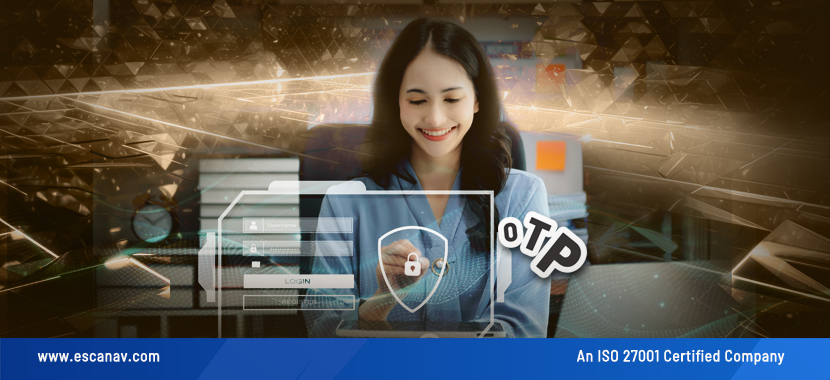
Multi-Factor Authentication is a security process that requires users to provide two or more verification factors to gain access to an application, account, or system. Instead of relying solely on a username and password, MFA introduces additional layers of protection, making it significantly harder for cybercriminals to breach accounts—even if they have stolen passwords.
MFA typically includes a combination of:
- Something you know (password or PIN)
- Something you have (smartphone, security token, or authenticator app)
- Something you are (biometric data such as fingerprint or facial recognition)
Why Passwords Alone Are No Longer Enough
Despite widespread awareness, weak or reused passwords remain one of the top reasons for data breaches. According to Verizon’s 2024 Data Breach Investigations Report, over 74% of breaches involved the human element, including stolen credentials.
Here’s why relying solely on passwords is dangerous:
- Easily guessed or cracked using brute-force or dictionary attacks.
- Phishing campaigns trick users into revealing credentials.
- Password reuse across multiple platforms multiplies risk.
- Credential dumps from previous breaches are sold on the dark web.
Passwords are inherently vulnerable. MFA, however, neutralizes most of these threats by requiring additional proof of identity.
Key Benefits of Implementing MFA
- Stronger Security Posture
By requiring multiple forms of verification, MFA greatly reduces the chances of unauthorized access. Even if a password is compromised, attackers cannot proceed without the second (or third) factor.
- Defense Against Phishing and Social Engineering
Many phishing attacks succeed because they rely on user credentials alone. MFA blocks access even when credentials are phished, providing a powerful line of defense.
- Compliance with Regulations
Regulatory frameworks like GDPR, HIPAA, and PCI-DSS now either mandate or strongly recommend MFA for protecting sensitive data. Implementing MFA ensures your organization stays compliant and avoids penalties.
- Safeguarding Remote Workforces
With remote and hybrid work models now common, securing access to corporate resources has become complex. MFA ensures that users logging in from any device or location are thoroughly verified.
- Customer Trust and Reputation Management
A data breach can irreparably damage customer trust. By adopting MFA, businesses signal their commitment to security, reinforcing confidence among clients, partners, and stakeholders.
Real-World Examples of MFA in Action
- Google’s Account Security Study found that SMS-based MFA blocked 100% of automated bots, 96% of bulk phishing attacks, and 76% of targeted attacks.
- Microsoft reported that MFA can block over 99.9% of account compromise attacks.
These statistics make one thing clear—MFA is not just effective, it’s essential.
Common Myths and Misconceptions
Despite its importance, some organizations still hesitate to implement MFA due to misunderstandings. Let’s bust a few common myths:
❌ “MFA is too complex for users.”
✅ Modern MFA methods, such as mobile app authentication and biometrics, are user-friendly and intuitive.
❌ “MFA will slow down business operations.”
✅ In reality, MFA adds only seconds to login processes but can save companies millions in breach-related damages.
❌ “We’re too small to be targeted.”
✅ Cybercriminals often target small and mid-sized businesses precisely because they have weaker defenses.
eScan’s Approach to Multi-Factor Authentication
At eScan, we understand the evolving cyber threat landscape and the need for scalable, intelligent, and user-friendly security solutions. Our MFA integration is designed with:
- Ease of use: Simple deployment and seamless user experience.
- Flexibility: Supports OTPs, push notifications, biometrics, and hardware tokens.
- Compatibility: Works across applications, cloud environments, and legacy systems.
- Granular control: Enforce policies based on user roles, device types, and risk levels.
Whether you’re a small enterprise or a large organization, eScan’s Multi-Factor Authentication solution empowers you to stay protected without compromising performance or productivity.
The Rising Costs of Inaction
Cybersecurity is no longer a reactive function—it’s proactive and strategic. Failing to implement MFA opens the door to:
- Data breaches and financial loss
- Reputational damage
- Non-compliance penalties
- Loss of competitive advantage
The question is not “Can you afford to implement MFA?” but rather “Can you afford not to?”
How to Get Started
Implementing MFA doesn’t have to be overwhelming. Here are quick steps to begin your MFA journey:
- Assess your current environment and identify critical systems and data.
- Choose the right MFA method—consider the balance between security and user convenience.
- Start with high-risk users and applications, such as admin accounts, financial systems, and remote access tools.
- Educate your users on how and why MFA works.
- Continuously monitor and adapt your MFA strategy based on threat intelligence and user feedback.
With eScan, this journey is made easier through our comprehensive suite of security solutions that integrate seamlessly into your existing IT infrastructure.
Final Thoughts: No More Excuses
The digital world doesn’t forgive cybersecurity oversights. As attackers get smarter and more persistent, the only effective response is to stay one step ahead—and Multi-Factor Authentication is one of the most powerful tools available today.
MFA is simple to implement, cost-effective, and proven to protect. There are no excuses left. Whether you’re managing enterprise networks, sensitive customer data, or even personal accounts, MFA is your front-line defense.
Make the smart choice. Make the secure choice. Make MFA non-negotiable.